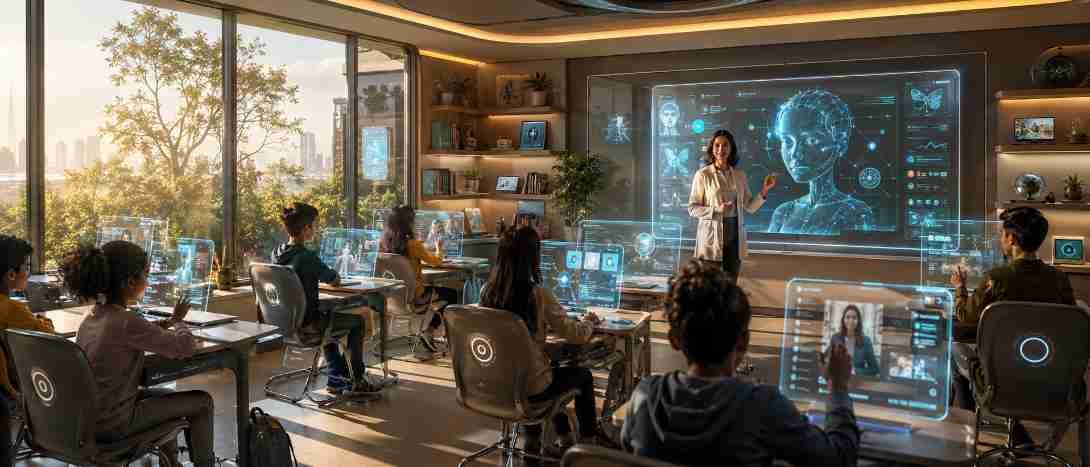
When I first experienced AI tools in my classroom, I felt like I had a co-teacher who never slept. AI in education 2026 isn’t just software—it’s a fully integrated teammate, capable of handling administrative tasks, personalizing lessons, and guiding students through complex problems.
Over 80% of students and 60% of educators now interact with AI regularly, and the shift is more structural than experimental. The global AI education market has ballooned to nearly $12 billion, reshaping how lessons are created, students are supported, and assessments are delivered.
From Chatbots to Agentic Learning Systems

I’ve watched AI evolve from simple Q&A chatbots into systems that can autonomously guide a student through an entire learning workflow.
Intelligent Tutoring Systems
Traditional digital tutors provided answers. Now, AI acts as a “Socratic guide,” adjusting its questioning in real time. I’ve seen students struggling with calculus transform when the AI prompts them to explain their reasoning step by step, mimicking one-on-one tutoring.
Hyper-Personalized Roadmaps
AI can instantly map student gaps. One student with uneven language proficiency receives a tailored module within days rather than months. These roadmaps adjust for neurodiverse learners, ensuring no one falls behind.
Simulation-Based Learning
In STEM classes, AI-driven virtual labs let students safely simulate high-risk experiments, from chemical reactions to 3D-modeled wing stress tests. Interactive feedback ensures mistakes become learning opportunities, not hazards.
Teacher Augmentation: Saving Hours, Amplifying Impact
AI in education 2026 doesn’t replace teachers—it supercharges them. I’ve personally reclaimed almost 10 hours weekly thanks to automated lesson planning, grading, and material translation.
Administrative Relief
AI handles repetitive tasks like rubric creation or basic math grading. This isn’t hypothetical—studies show teachers save 5.9–12 hours weekly, time now redirected toward mentorship and student engagement.
Global Upskilling Mandates
Programs like IndiaAI partnering with IIT Madras focus on “AI Literacy for Teachers,” training one million educators to integrate AI practically into classrooms. These initiatives prioritize human-AI collaboration rather than replacement.
Strategic Classroom Shifts
With routine work automated, my colleagues now focus on high-value tasks: ethical debates, project guidance, and emotional support, improving both learning outcomes and teacher satisfaction.
Policy and Governance Gaps
Even with widespread AI use, formal policies lag. Fewer than 15% of schools have comprehensive AI frameworks, according to UNESCO. This means students often use AI tools daily without clear safety baselines.
Funding and Accreditation Risks
Governments and accreditation bodies increasingly tie financial support to evidence of privacy safeguards, bias monitoring, and human oversight in high-stakes evaluations. Schools without these protocols risk losing critical funding.
Assessment Redesign
Standard essays no longer test understanding effectively. AI in education 2026 pushes schools to adopt project-based exams, oral defenses, and supervised simulations. These methods reduce plagiarism and increase engagement.
Practical Impacts on Learning and Administration
| Domain | Traditional Method | AI-Assisted Model (2026) | Strategic Impact |
| Lesson Creation | Manual slides, worksheets | AI co-creates multimedia modules | Drops prep time from 100+ hours to minutes |
| Student Support | Standard pacing, reactive | Dashboard alerts, instant diagnostics | Shifts support to proactive intervention |
| Assessment | Static exams, high copying risk | Hyper-customized, project-oriented tests | Lowers plagiarism, boosts problem-solving |
In my classroom, I noticed students became more engaged when tests aligned with personal interests, proving AI’s ability to enhance motivation and learning retention.
Bridging Online vs Offline Learning Advantages
AI tools now bridge the gap between digital and physical learning. Students benefit from personalized online modules while still engaging in in-person labs and mentorship.
This hybrid approach mirrors the findings in online vs offline learning advantages, where blended instruction improves comprehension and retention, but with AI, the personalization scales in ways that were previously impossible.
Original Insight: AI for Early Intervention
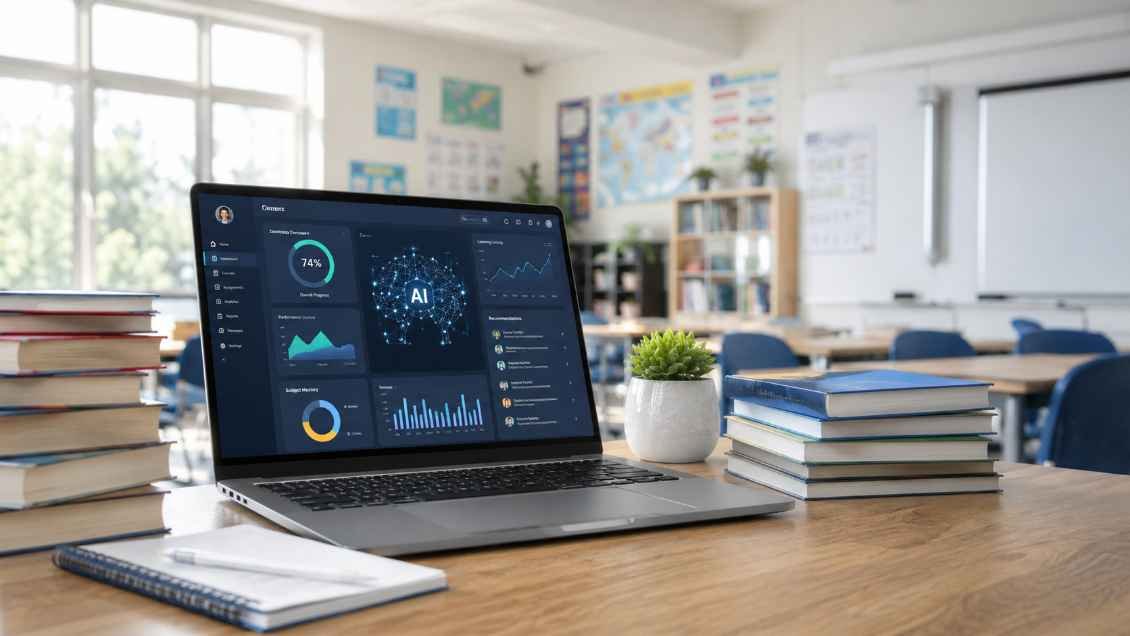
One unexpected finding I observed is AI’s role in early mental health intervention. Predictive analytics now flag students at risk of academic burnout or disengagement, allowing targeted counseling before crises occur. Unlike conventional monitoring, these predictions operate in real time, giving teachers actionable data without constant manual tracking.
Predictive analytics now flag students at risk of academic burnout or disengagement, allowing targeted counseling before crises occur, and to use AI for small business marketing, highlighting practical AI applications in daily workflows.
FAQs
1. How is AI changing traditional classrooms?
AI automates administrative tasks, personalizes lessons, and provides real-time feedback, allowing teachers to focus on mentorship and high-value instruction.
2. Can AI replace teachers entirely?
No. Current AI works as an augmentative tool. Teachers guide critical thinking, ethical reasoning, and emotional support.
3. Are there risks in using AI in schools?
Yes. Risks include data privacy, bias in algorithms, and reliance on unsupervised tools. Proper policies and human oversight are essential.
4. What’s the cost of implementing AI in education?
Market estimates show $10–12 billion globally. Costs include infrastructure, software, and teacher training, though savings in admin time often offset expenses.
5. Which subjects benefit most from AI integration?
STEM, languages, and remedial programs see the largest gains, particularly in personalized instruction and simulation-based learning.
My Takeaway: Classrooms Powered by AI
AI in education 2026 isn’t just an upgrade—it’s a cultural and operational shift. When teachers embrace AI as a teammate, lessons are faster to design, support becomes proactive, and assessments more meaningful.
My advice: start small with tutoring systems or simulation labs, monitor outcomes, and scale gradually. The future of teaching is hands-on, data-driven, and uniquely human-AI collaborative.
