
Balancing classes, assignments, exams, and a social life can feel impossible in college. I’ve spent my own semesters testing every method under the sun, and what separates productive students from stressed-out ones is not luck—it’s strategy.
Time management strategies for college students are the backbone of academic success, and implementing structured systems early pays dividends all semester.
Core Prioritization Frameworks That Actually Work
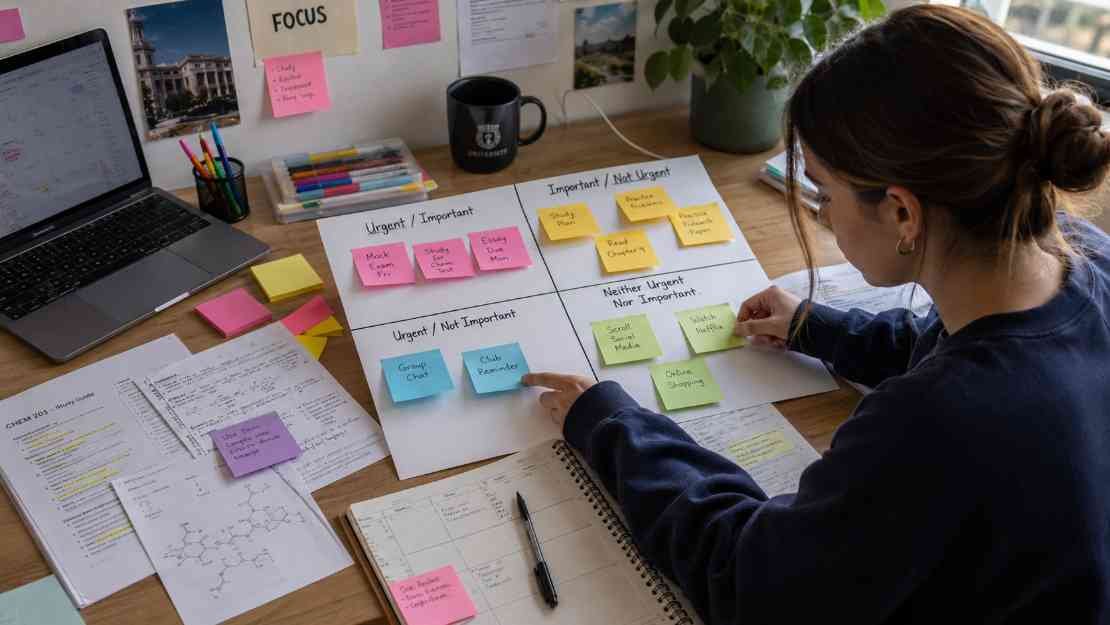
Without a framework, your to-do list can spiral out of control. I’ve found that applying clear prioritization methods makes even the busiest weeks manageable.
The Eisenhower Matrix: Urgency Meets Importance
I divide tasks into four quadrants: urgent/important, important/not urgent, urgent/not important, and neither. When a research paper is due tomorrow, it goes in the top-left quadrant. Studying for next week’s exam goes into the scheduled-but-important section.
Tasks like checking social media during study time fall into “eliminate.” This simple visual keeps me focused and stops me from wasting energy on distractions.
The 1-3-5 Rule: Keep Daily Goals Realistic
Every morning, I pick one major task, three medium tasks, and five minor tasks. One essay draft, three textbook chapters, five emails or small errands. Limiting daily goals this way prevents decision fatigue and ensures consistent progress, no matter how chaotic the day feels.
Eat the Frog: Morning Momentum
Tackling your hardest assignment first transforms your entire day. I test this on Mondays with my toughest readings. Once the most daunting task is out of the way, I notice everything else flows easier, and stress levels drop dramatically.
Scheduling Techniques That Stick
Frameworks tell you what to do; scheduling ensures you do it. My semester improved drastically once I treated time like a class I couldn’t miss.
Time Blocking: Your Calendar Is Sacred
I reserve fixed blocks for study sessions, meals, workouts, and even downtime. Treating your schedule like a timetable helps enforce boundaries, and surprisingly, you’ll have more free time than before.
The Pomodoro Technique: Short Bursts, High Focus
I work in 25-minute intervals followed by five-minute breaks. After four rounds, I take a longer 20–30 minute break. This prevents mental fatigue and keeps retention high. Anecdotally, my reading speed increased by 20% after adopting Pomodoro sessions during exam prep.
Syllabus Mapping: Plan for Hell Weeks
At the semester start, I record all deadlines, exams, and major projects in a master calendar. Predicting “hell weeks” lets me redistribute effort in advance, avoiding that all-nighter panic that ruins grades and sleep.
Monotasking: One Task, One Focus
Multitasking is a myth when it comes to studying. I now silence notifications and focus solely on one task. Errors drop, comprehension rises, and the work feels less exhausting.
Digital Productivity Stack
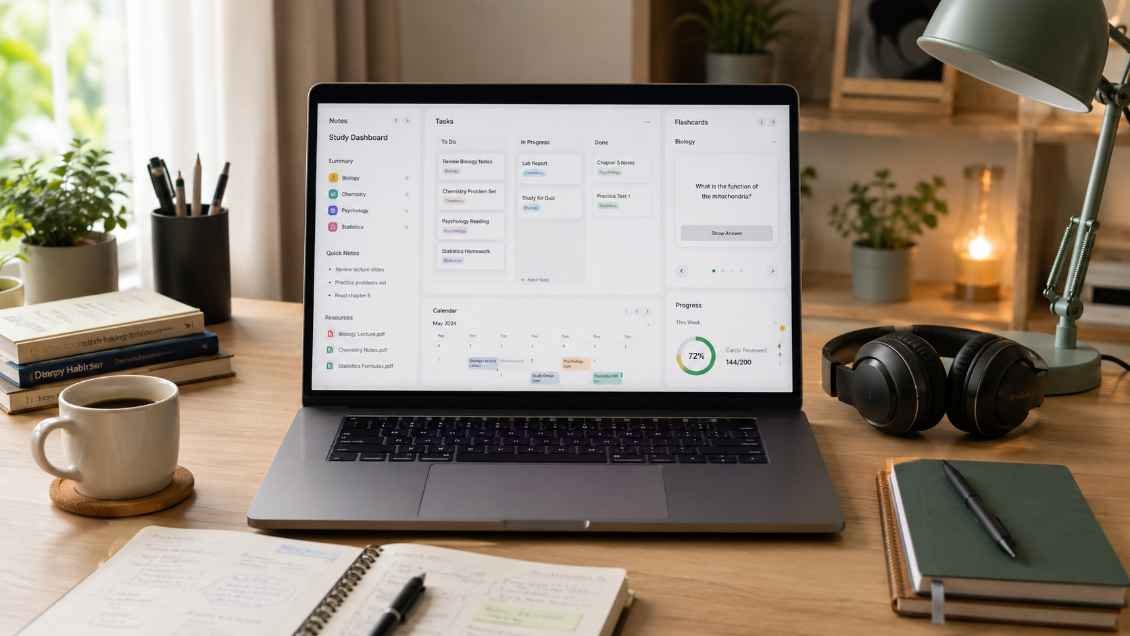
Harnessing software streamlines your workflow. I’ve curated tools that make organization effortless. Platforms like Notion, Quizlet are fantastic and pairing them with free educational resources for students can further enhance your learning efficiency.
- Note-Taking & Lifelogging: Notion and Evernote store lecture notes, syllabi, and assignment instructions in one place.
- Task Management: Todoist and Trello turn overwhelming to-do lists into manageable, actionable boards.
- Distraction Blockers: Freedom and Forest limit social media and app distractions during study sessions.
- Active Revision: Anki and Quizlet use flashcards and spaced repetition to reinforce memory faster.
Even a 10-minute setup each week can save hours in mental overhead.
Lifestyle and Boundary Strategies
Time management isn’t just software and scheduling—it’s about managing energy and habits.
Protect Your Sleep
I aim for 7–8 hours per night. Sleep deprivation kills retention; all-nighters often backfire. Cognitive performance drops sharply after 16 hours awake, according to the National Sleep Foundation.
Utilize Hidden Time
Short breaks between classes are golden. Reviewing notes or completing quick tasks during these gaps frees evenings for socializing or downtime without guilt.
Learn to Say No
College offers endless activities and events. I politely decline non-essential invitations when deadlines loom. Maintaining boundaries is essential for mental health and consistent academic performance.
Why AI in Education Is the Next Productivity Edge

Modern students can also leverage AI in education to streamline learning. I’ve experimented with AI-based study aids that automatically summarize readings, generate quizzes, and provide spaced repetition recommendations. Integrating these tools with my existing time management systems magnifies efficiency and reduces wasted effort.
Conclusion: Take Control Before Chaos Takes You
Time management is the difference between scrambling at 2 AM and walking confidently into finals. Start with one prioritization method, add structured scheduling, layer in digital tools, and protect your energy with sleep and boundaries. Remember, your system is personal—experiment, refine, and adjust until it feels natural.
One small tip I swear by: pick your “frog” task first thing tomorrow morning. It sets the tone for a productive day you actually enjoy.
FAQs
1. How do I start using time blocking effectively?
Pick two or three critical tasks per day, assign them fixed slots in your calendar, and treat them as non-negotiable appointments.
2. Can digital tools replace traditional planners?
Digital tools excel at reminders, task tracking, and data integration. Combine them with a physical notebook if you retain information better by writing.
3. Is multitasking ever effective in college?
Research and personal experience show multitasking reduces focus and increases errors. Stick to monotasking for deep learning.
4. How early should I map my syllabus for the semester?
Before the first week, ideally. Early mapping gives foresight on peak workload periods and prevents last-minute cramming.
