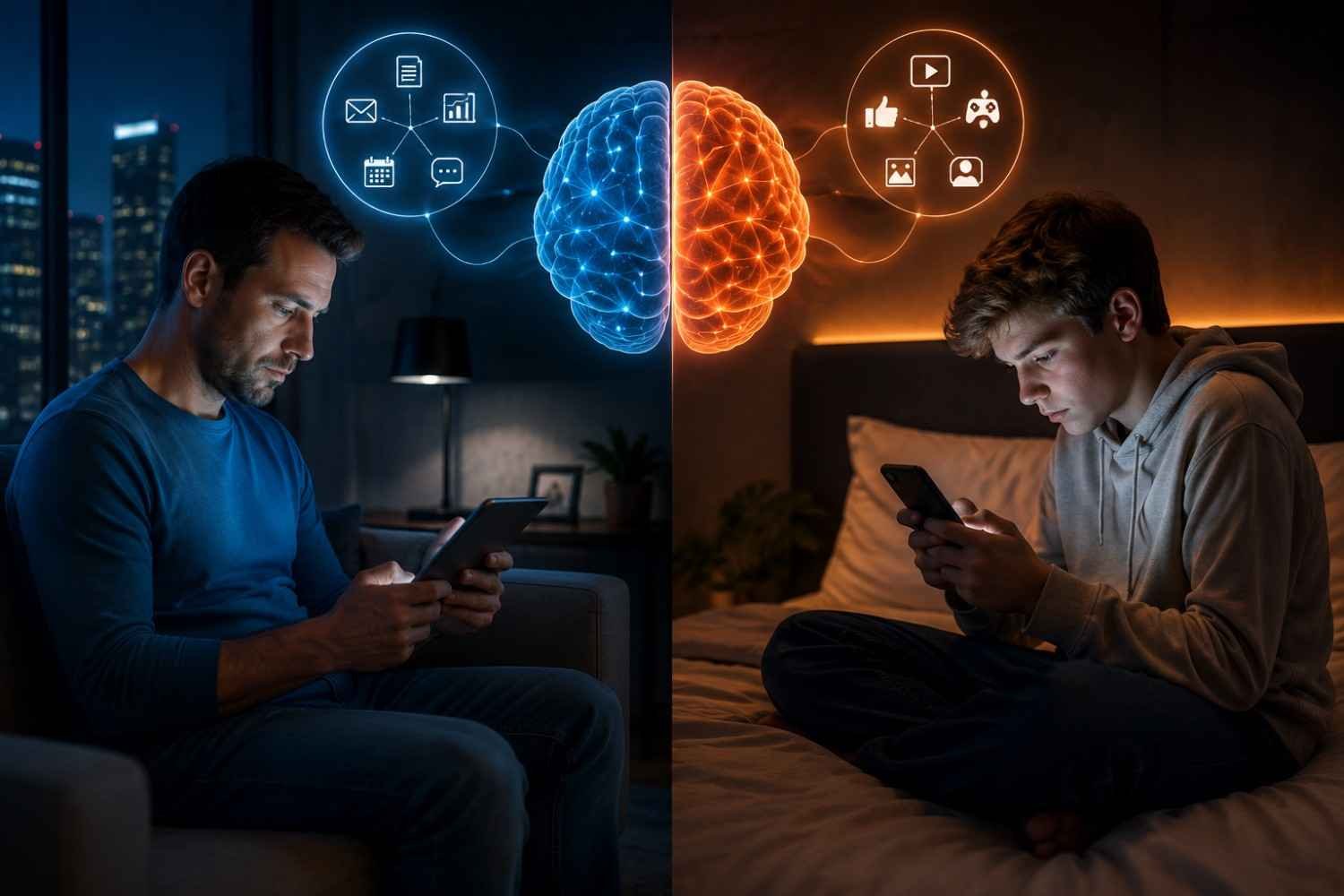
Screen time has become so normal that most people barely notice how much of their day happens through a screen. Work, entertainment, communication, shopping, studying, and even relaxation now revolve around phones and laptops. The problem is not just the number of hours people spend online. It is the constant stimulation those hours create for the brain.
Teenagers and adults both experience the effects of excessive screen exposure, but not in exactly the same way. A teenager’s brain is still developing, especially in areas connected to impulse control and emotional regulation. Adults, meanwhile, often deal with slower but more long-term effects tied to attention span, cognitive overload, and mental exhaustion. In both cases, the brain struggles when it rarely gets a break from nonstop digital stimulation.
Why Screens Trigger Such Strong Brain Responses?
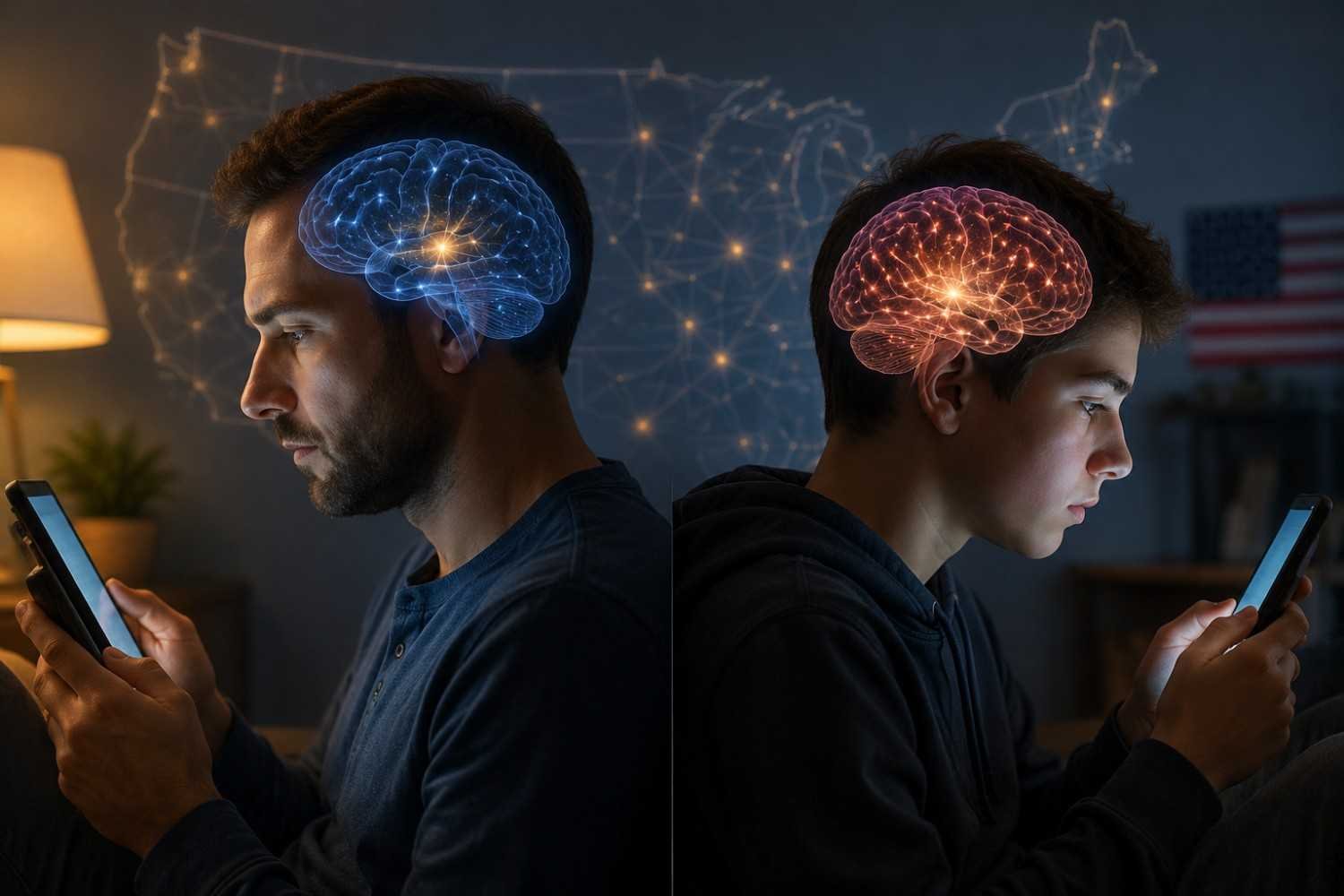
Modern apps and digital platforms are designed to hold attention for as long as possible. Social media notifications, autoplay videos, rapid scrolling, and endless content feeds all activate the brain’s reward system.
Dopamine Keeps the Brain Chasing More Stimulation
Every notification or short burst of entertainment creates a small dopamine response. Dopamine itself is not harmful. It plays an important role in motivation and reward-seeking behavior. The problem begins when the brain becomes used to constant stimulation without pauses.
Over time, slower activities like reading, studying, or even regular conversations can start feeling less engaging compared to the rapid pace of digital content. This is one reason many people struggle with focus after spending long periods consuming short-form content or multitasking across several apps at once.
The brain slowly adapts to high-speed stimulation patterns, making sustained concentration more difficult.
Passive Screen Time Affects the Brain Differently
Not all screen use impacts the brain equally. There is a major difference between intentional screen use and passive consumption.
Using screens for:
- learning
- editing videos
- creative work
- researching information
usually activates the brain differently than mindless scrolling for hours.
The biggest issue today is that many people rarely consume content intentionally anymore. Algorithms constantly encourage passive engagement, which increases cognitive fatigue much faster than focused digital activity.
Teenagers Experience Stronger Emotional Effects
Teenagers are generally more vulnerable to excessive screen exposure because their brains are still developing important self-regulation systems.
The Emotional Centers of the Brain Are Highly Active
During adolescence, the brain goes through major structural and emotional changes. The reward system becomes highly sensitive, especially in social environments. Social media platforms take advantage of this naturally.
Likes, comments, streaks, and notifications create repeated reward cycles that encourage compulsive checking behavior. Since the prefrontal cortex is still developing, teenagers often have a harder time stepping away from highly stimulating digital environments.
This affects more than just attention spans. Excessive screen use can also influence:
- emotional regulation
- self-esteem
- social comparison
- anxiety levels
- impulsive behavior
Teenagers process peer approval very intensely, which makes social media pressure feel emotionally overwhelming much faster than many adults realize.
Sleep Problems Affect Teen Brain Development
Teenagers also need more restorative sleep than adults because their brains are still developing. Unfortunately, screens interfere heavily with that recovery process.
Blue light suppresses melatonin production, which disrupts circadian rhythms and reduces deep sleep quality. Poor sleep impacts memory consolidation, emotional stability, focus, and learning ability.
A lot of teenagers stay mentally overstimulated late into the night because phones create continuous emotional and cognitive engagement right before sleep.
Adults Experience More Cognitive Overload
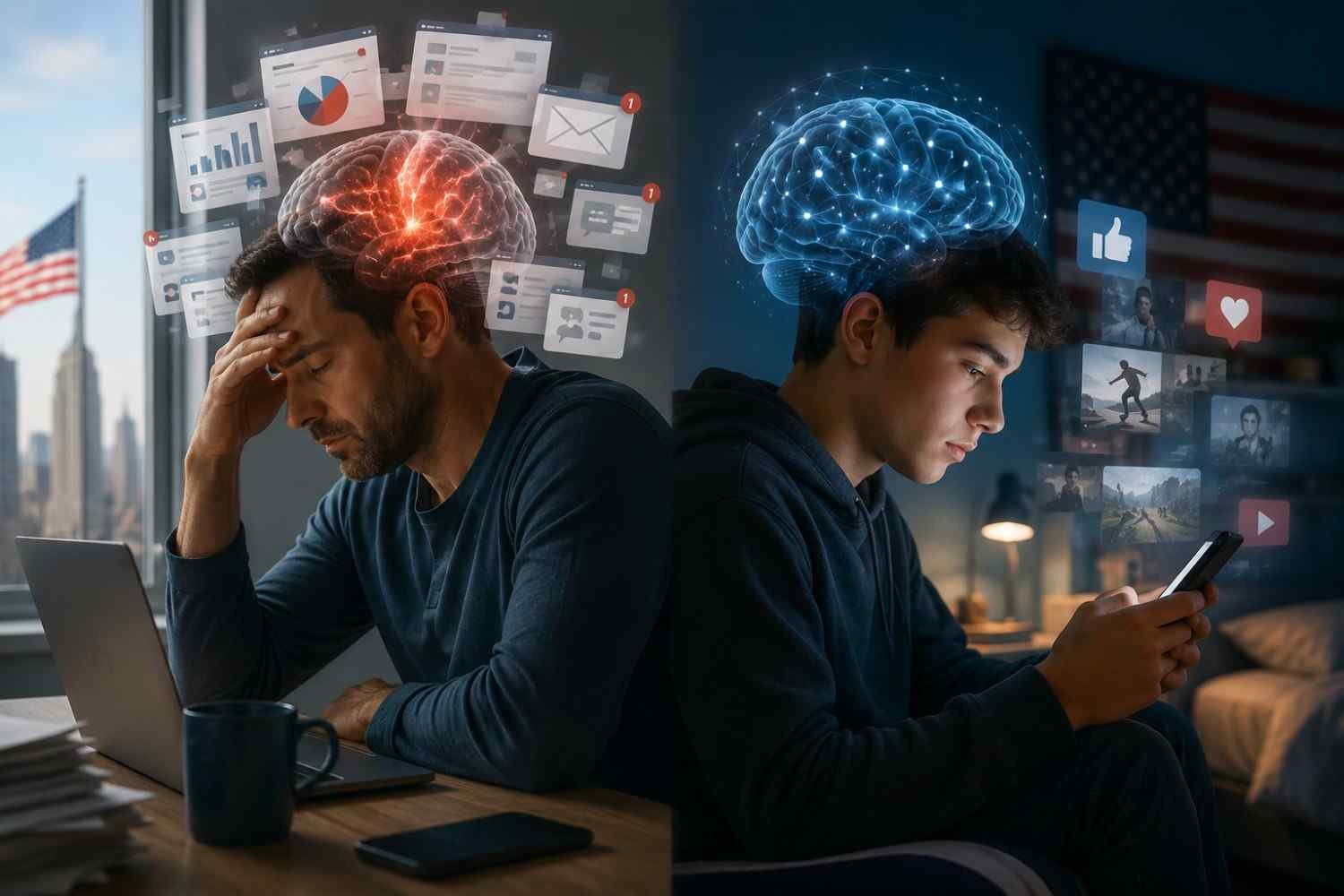
Adults often assume screen time is mostly dangerous for younger people, but long-term digital overload affects adults differently, rather than less severely.
Constant Multitasking Reduces Deep Focus
Many adults spend entire days switching between: emails, video calls, social media, streaming content, messaging apps, and work dashboards. The brain rarely gets time to settle into uninterrupted concentration.
This constant switching behavior trains the brain to expect distraction. Over time, attention span weakens, mental fatigue increases, and deep analytical thinking becomes harder to sustain.
Some neurological studies have also connected prolonged excessive screen exposure with cortical thinning in areas linked to memory, reasoning, and decision-making.
The effects are often subtle at first. Adults usually describe them as:
- brain fog
- exhaustion
- difficulty focusing
- reduced patience
- mental burnout
instead of recognizing them as symptoms of digital overstimulation.
Adults Rarely Give Their Brains Recovery Time
One major difference is that adults often normalize digital exhaustion because work culture encourages permanent connectivity.
A lot of people wake up checking notifications and end the day scrolling through content in bed. Even health searches like how I increase my metabolism often happen while juggling multiple tabs, messages, and distractions simultaneously.
The brain rarely experiences true downtime anymore. That constant stimulation leaves very little space for reflection, emotional processing, or uninterrupted thinking.
The Brain Needs Boredom More Than People Think
One of the most overlooked parts of brain health is recovery from stimulation.
Moments of boredom, quiet thinking, walking, or simply sitting without constant input help the brain reset attention systems and process emotions properly. When screens fill every empty moment, the brain loses opportunities to recover naturally.
This is why many people feel mentally tired even after spending hours “relaxing” online. Passive digital consumption often overloads the brain instead of helping it recover.
Healthier Screen Habits Usually Work Better Than Extreme Detoxes

Completely eliminating screens is unrealistic for most people. Work, education, and communication depend heavily on technology now.
The healthier approach is usually reducing compulsive and passive screen behavior rather than fearing technology entirely.
Small changes often make a noticeable difference:
- avoiding screens before sleep
- reducing notification overload
- Taking breaks during long work sessions
- limiting passive scrolling
- creating screen-free periods during the day
The goal is not perfection. The goal is to help the brain experience more balance and less constant stimulation.
FAQs: How Screen Time Affects the Brain in Adults and Teenagers Differently
1. How does screen time affect teenagers differently from adults?
Teenagers are more vulnerable because their brains are still developing, especially areas related to impulse control, emotional regulation, and reward processing.
2. Can excessive screen time affect focus in adults?
Yes. Constant multitasking and passive digital consumption can reduce attention span, increase mental fatigue, and make deep focus harder over time.
3. Why does screen time interfere with sleep?
Blue light from screens suppresses melatonin production, disrupting circadian rhythms and reducing the quality of restorative sleep.
4. Is all screen time harmful to the brain?
No. Intentional screen use for learning, creativity, or productive work affects the brain differently than excessive passive scrolling or nonstop digital multitasking.
The Real Problem Is Constant Mental Stimulation
Technology itself is not the enemy. The bigger issue is how little recovery time the modern brain receives between waves of stimulation. Notifications, videos, messages, and endless scrolling keep attention systems active almost nonstop throughout the day.
That constant input slowly changes how people focus, rest, process emotions, and even experience boredom. Teenagers may show those effects more emotionally, while adults often feel them through exhaustion and cognitive overload. Either way, the brain still needs moments of quiet to function well over the long term.
